GHRP-2
GHRP-2 (Growth Hormone Releasing Peptide-2) is a synthetic hexapeptide investigated in controlled laboratory research for its ability to stimulate endogenous growth hormone secretion through activation of the ghrelin receptor (GHS-R1a). Studies focus on its role in pituitary signaling, metabolic regulation, and appetite-modulating pathways. This material is intended solely for non-human, in vitro research and is not approved for diagnostic, therapeutic, veterinary, or human use.
For laboratory research use only. Not for human or veterinary use. Not intended for diagnostic, therapeutic, or clinical applications.
Purchase Options
GHRP-2
Form: Scientific-grade, Lyophilized Powder
Purity: ≥99%
CAS Number: 158861-67-7
GHRP-2 is a research-only peptide compound evaluated for its activity as a ghrelin receptor agonist in laboratory environments. It is studied for its potential involvement in endogenous growth hormone release mechanisms.
Shipping & Delivery
- 📦 UPS Ground (US): $15.00 — 5 business days
- 🚚 UPS 3 Day Select® (US): $20.00 — 3 business days
- 🚚 UPS 2nd Day Air® (US): $25.00 — 2 business days
- 🆓 Free Shipping (US): Orders $200.00+ ship free
- 🌍 International Tracked: $24.95–$45.00 based on region
- 🎁 Free International Shipping: Orders $300+ qualify
Recommended Add-Ons
- 💎 Cold Pack Protection: +$5.00 (Keeps sensitive items stable in transit)
- 🔐 Shipping Insurance: +$3.50 flat — Protects against loss or damage
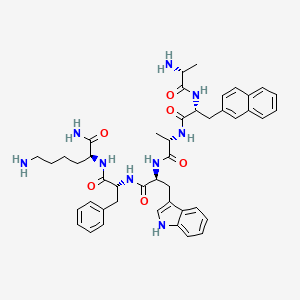
Chemical Structure & Identifiers
GHRP-2 is a hexapeptide compound evaluated in preclinical laboratory research for its role in stimulating the release of endogenous growth hormone via ghrelin receptor activation. This compound is intended strictly for in vitro investigative use and is not approved for diagnostic or clinical applications.
Research Applications of GHRP-2
GHRP-2 is primarily studied in **preclinical research** for its potent growth hormone-releasing properties. Its key research applications include:
- Growth Hormone Secretion: As a potent ghrelin mimetic, GHRP-2 is used to investigate the mechanisms of growth hormone release from the pituitary gland and its downstream effects.
- Appetite Regulation: Research suggests GHRP-2 can stimulate appetite and food intake, making it a valuable tool for studying the role of ghrelin and GH in metabolic regulation and eating behavior.
- Body Composition Studies: Due to its influence on GH release, GHRP-2 is explored in studies related to muscle growth, fat reduction, and overall body composition changes.
- Bone Health: Investigations are ongoing into its potential role in improving bone density and managing conditions like osteoporosis through enhanced GH secretion.
- Sleep Quality: Some studies suggest a link between GH-releasing peptides and improved sleep patterns, leading to research into GHRP-2's effects on sleep quality.
It is important to note that while preclinical evidence is strong and diverse, GHRP-2 remains an **investigational research chemical**. Its use outside of controlled research settings is not approved by regulatory bodies for any therapeutic use in humans or animals.
Guidelines for Experimental Use
GHRP-2 is strictly intended for **laboratory research purposes only**. It must be handled by qualified research personnel in a controlled laboratory environment, adhering to all applicable safety protocols and guidelines for investigational research chemicals. This product is **not approved for human consumption, therapeutic use, or veterinary applications**. Its use is limited to scientific investigation and analysis. Proper laboratory safety equipment, including personal protective equipment (PPE), and procedures must be employed during its handling, storage, and experimental application. Researchers should consult relevant safety data sheets (SDS) and institutional guidelines before use.
Storage and Handling Recommendations
For optimal stability and preservation of GHRP-2, observe the following recommendations:
- Storage: Store lyophilized powder at -20°C to -80°C (long-term) or 2°C to 8°C (short-term, for up to 2-4 weeks).
- Reconstitution: Reconstitute with sterile, deionized water or a suitable solvent as per specific experimental protocols. Avoid repeated freeze-thaw cycles.
- Manejo Handle under aseptic conditions to prevent contamination. Use appropriate personal protective equipment (PPE), including gloves and eye protection.
- Stability: Once reconstituted, solutions should be stored at 2°C to 8°C and used within a short period, typically 24-72 hours, depending on the solvent and concentration. Long-term storage of reconstituted solutions is not recommended.
- Disposal: Dispose of GHRP-2 and any waste materials in accordance with local and institutional hazardous waste regulations.
Strict adherence to these guidelines will help maintain the integrity and purity of the compound for research applications.
Key Scientific References
For more detailed information on GHRP-2 and its research applications, please refer to the following scientific literature and review articles, primarily from preclinical studies:
- Growth hormone releasing peptide-2 (GHRP-2), like ghrelin, increases food intake in healthy men (2005)
- The Safety and Efficacy of Growth Hormone Secretagogues (2017)
- One-year intranasal application of growth hormone releasing peptide-2 (GHRP-2) (2015)
- Analysis of growth hormone releasing peptide GHRP-2 for doping control purposes (2011)
- PubChem Compound Summary: GHRP-2 (CID 6918245)
*(Note: References are primarily focused on preclinical and mechanistic studies, reflecting GHRP-2's status as a research compound.)*
Important Compliance Statement
This product, GHRP-2, is sold exclusively for **research and development purposes**. It is classified as a research chemical and is **not a drug, food, or cosmetic**. It has not been evaluated or approved by the FDA or any other regulatory authority for safety, efficacy, or any other use in humans or animals. By purchasing this product, the user acknowledges and agrees to comply with all applicable local, national, and international laws and regulations regarding the handling, storage, and use of research compounds. Any use of this product for purposes other than legitimate scientific research is strictly prohibited and may lead to severe legal and health consequences.
Analytical Validation & Documentation (COA, HPLC, MS)
Each production lot is subjected to rigorous analytical validation to confirm quality, purity, and molecular identity under research-grade standards. Full supporting documentation is available upon request.
- COA (Certificate of Analysis): Includes batch number, purity percentage, traceability of each constituent ingredient, storage instructions, and full QC test results.
- HPLC (High-Performance Liquid Chromatography): Provides chromatographic confirmation of purity and compound homogeneity.
- MS (Mass Spectrometry): Confirms molecular weight and verifies structural integrity of the compound.
- Traceability: Documents are traceable to their respective manufacturing lot and are intended to support reproducibility and transparency in scientific investigation.


Displayed above: Sample Certificate of Analysis – AOD-9604 (3-page image preview)
Storage & Shipping
All of our products are manufactured using the Lyophilization (Freeze Drying) process, which ensures stability during transit and long-term storage. Below are the official recommendations:
- Stability During Shipping: Products are 100% stable for shipping for up to 3–4 months at ambient temperature.
- After Reconstitution: Once reconstituted with bacteriostatic water, the peptide must be stored in a refrigerator and will remain stable for up to 30 days.
- Room Temperature Storage: Lyophilized powder can be safely stored at room temperature until reconstitution, provided it remains sealed and protected from light.
- Refrigerated Storage (Short Term): Store under 4°C (39°F) if not used immediately. Suitable for storage up to several weeks or months.
- Frozen Storage (Long Term): For extended stability (months to years), store in a freezer at -80°C (-112°F).
Note: Avoid repeated freeze-thaw cycles. Always aliquot after reconstitution when necessary. Follow institutional safety protocols for handling all research compounds.
For advanced storage tips and reconstitution guidance, contact us or refer to our extended documentation.